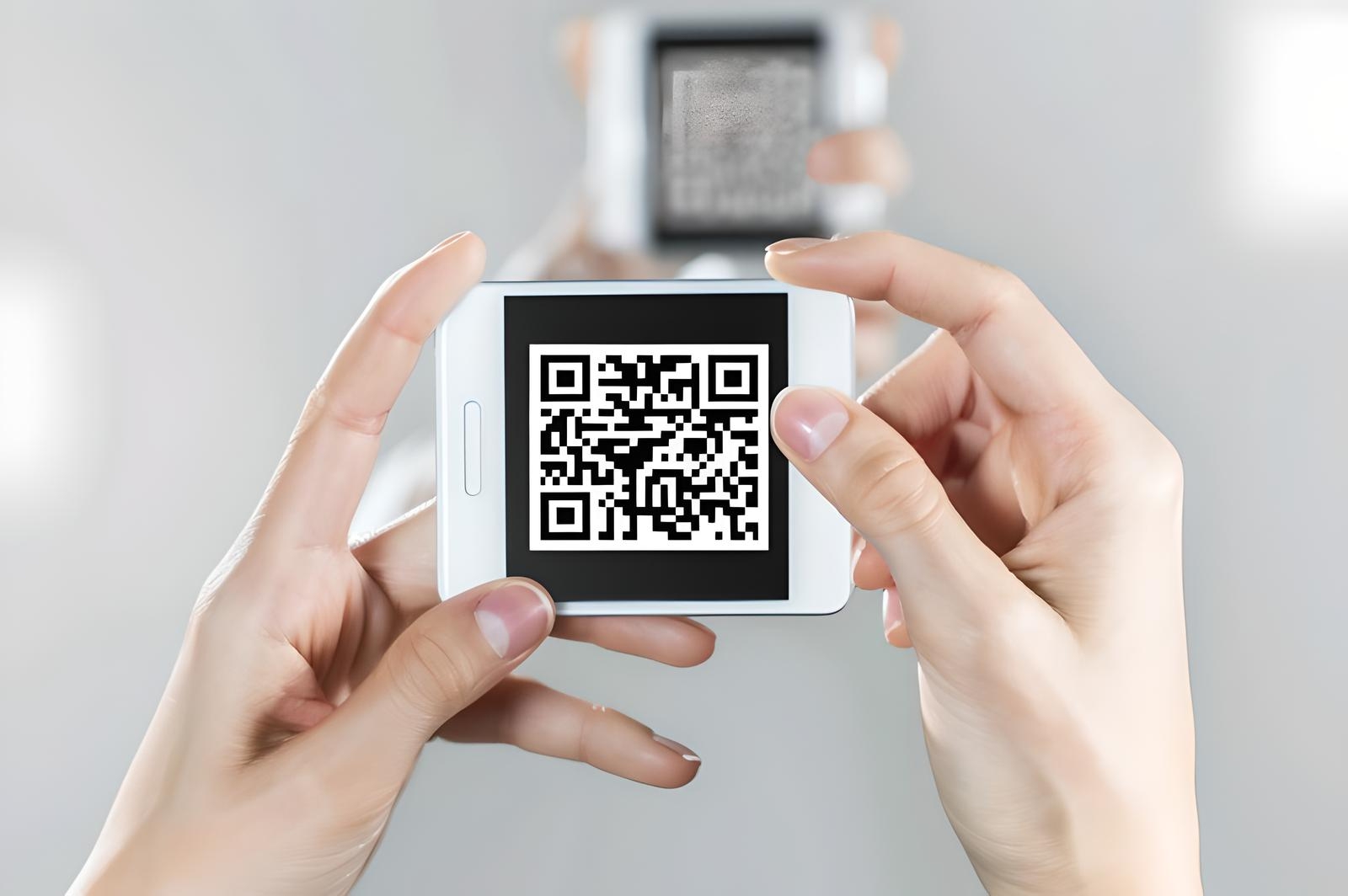
QR codes - new digital magic
At Veonix graphic design studio, we know which QR code marketing tactics can bring new customers to your business. We talked about this in detail in the article.

The QR code turns the banner into an entry point to the site, check into a marketing trigger, packaging into a channel of communication with the client. It also provides statistics that cannot be obtained from a regular barcode, even if you really ask. Point your smartphone camera at the black and white square, and now you are already on the landing page, in the application, or subscribed to the newsletter. In the article we tell you what a QR code is, how it works, who needs it, how safe it is and how to create your own.
What is a QR code
This is Quick Response Code, literally in English it means “quick response/response code”. It was invented by Japanese engineer Masahiro Hara in 1994 to mark auto parts in the warehouses of Denso Wave (a division of Toyota). He was inspired by a Go board: black and white stones formed the basis of a recognizable design with three corner markers.
The main difference from the classic barcode is its two-dimensionality. The barcode is read only horizontally, the QR is readable both vertically and horizontally. Therefore, instead of a couple of dozen characters, it stores thousands (up to 4,000 characters), including links, phones, Wi-Fi passwords, even text messages.
Types of QR codes:
-
Static. The information is tightly protected: the link or text does not change. Convenient for business cards, badges, documentation.
-
Dynamic. The data can be updated, but the code itself remains the same. They work through a redirect, so they are more compact and allow you to collect viewing statistics: time, geo, device. Ideal for marketing and advertising.
Other two-dimensional codes are similar to the QR code: Data Matrix, Aztec. The classic one is easy to distinguish by three large squares in the corners, which help you quickly find and recognize data when scanning. Data Matrix was invented by Semacode, its feature: it can be read well even in a very small size, for example, on microcircuits or jewelry. Aztec was developed by Welch Allyn and has a large central square marker that replaces the corner QR beacons. This is a favorite of airlines and railways: tickets with it can be scanned even on a crumpled printed piece of paper.
But the QR code has a superpower that makes all relatives jealous: it is almost immortal. Damaged a corner? Did you cover half of it with a logo? Spilled coffee? Nothing - built-in error correction (Reed-Solomon algorithm) allows you to recover up to 30% of damaged data. It’s as if you set the password “in the forest,” but you only enter “in the forest,” and the system lets you in.
There are four levels of protection:
-
L - Low, recovers up to 7% of lost data.
-
M - Medium, up to 15% of data.
-
Q - Quartile (quarter), up to 25% of the data.
-
H - High, up to 30% of data.
The maximum level of protection is relevant for paper media: posters, business cards, and so on. If the poster spent six months in the rain, brochure children painted it, and someone drew a mustache on the poster, the QR code will still lead you where you need to go. In addition, you can use artistic tricks: glue the logo on top of the squares, paint them in different colors, the algorithm considers this as damage and will restore the data.
How does a QR code work?
This is a portal from offline to online, which does not require special equipment, for example, VR glasses: a smartphone camera is enough. Three square “beacons” in the corners (corner markers) help the gadget orient itself, where is up and where is down. Small additional elements (alignment patterns) are needed for correct reading of information; timing stripes of black and white squares between the corner markers tell about the grid and the size of the modules. The main data is protected in the data area.
The algorithm is simple:
-
The camera scans the code and analyzes the image.
-
The program reads modules, each tiny square is a bit of data.
-
The Reed–Solomon algorithm restores the missing pieces of the puzzle.
-
You receive a payment link, access to Wi-Fi, a business card - all in a split second.
Where and why are QR codes used?
The magic is that they turn any surface into an “Action” button. You are riding on the subway, see a poster for a concert of your favorite band, scan it, and tickets for good seats are already in your mail. This allows you to “catch” fans of spontaneous purchases: if you could only buy tickets in person at the box office or on the official website (which you first need to find in a search engine or copy from a poster), there would be fewer sales.
The main thing here is saving time and a minimum of actions. That’s why the average CTR on a QR code click is 37%—a number many marketers would kill for. Major global brands such as PepsiCo, Walmart and others believe that they will soon make a retail revolution and completely replace conventional barcodes. The QR code can encrypt information about the composition, expiration date, ethical production standards, and much more that may raise questions before purchasing.
What is happening can be called a phygital shift - a combination of the physical world and the digital. QR codes allow customers to travel back and forth and businesses to interact with them when they are interested. Here are just a few examples:
-
Bar counter - using the code on the stand under the glasses, you get into the TG chat with promotions and get a discount before the bartender has time to pour the beer.
-
Smart menus - follow the QR code and you will see the dishes and drinks you want. Magic? No, artificial intelligence and the history of your orders.
-
Presentation new product - using the embedded black and white square you can go to the landing page, to the calculator or to the brief form.
In addition to sales, they are used in other areas. For example, in a warehouse, dynamic QR codes work as navigators, easily integrate with existing management systems, one scan - and you already know that there are three pallets of yogurt left, you urgently need to order more. In the hospital, a QR code on a patient's bracelet provides instant access to medical history, without paper cards with holes from a stapler. In factories, QR passes open turnstiles faster than a security guard can ask, “Where are you going?” The code also often provides links to video instructions and technical manuals. And since you can generate a QR code even in free programs, it is also used for private occasions. Not long ago, a video went viral on TikTok where a couple announced their engagement through a fake QR menu code. After that, according to Google Trends, requests for “QR code wedding invitations” increased by 300%.
It turns out that this is a universal language for business and people, with which you can increase sales, collect data, open doors and propose marriage.
How to scan a QR code
Easier than ordering pizza. You are definitely in the know, so let’s not get carried away and just list the steps:
-
Open your smartphone camera - most models can already recognize codes without any applications. If not, download any scanner from PlayMarket or RuStore.
-
Point to the square.
-
A link to the site, to payment, or a hint on what to do next pops up on the screen; all you have to do is click.
Important: do not scan everything, especially random stickers at a bus stop. See what URL pops up - if it looks strange (for example, go0gle.qr.ru instead of google.com), it’s better not to click. For business, use branded QR codes in corporate colors with a logo - they inspire more trust among customers. Next, let's talk about security in more detail.
Safety when using QR codes
In themselves they are harmless, the danger is not in the square, but in where it leads. Hackers play on trust and laziness: if you don’t check, you can easily end up without money in your account.
Here's what scammers usually do:
-
Social engineering. A QR next to tempting text (“70% discount”, “free Wi-Fi”) - and the user clicks without looking, and then sorts out the consequences.
-
Phishing in email. Direct malicious links are filtered out by spam filters, but they are powerless against QR codes, as a Cisco Talos study shows.
-
Physical substitution. The simplest option is to stick your “curcode” on top of yours on a poster or business card.
We have already told how to protect ordinary users; in short, be more careful and take your time. Here are some recommendations for businesses:
-
generate codes from trusted services and configure SSL/TLS on the sites they link to;
-
use dynamic options: you can update the content and quickly close the hole if a failure suddenly occurs;
-
make branded QR codes with a logo and in corporate colors, they are more difficult to fake and easier to recognize;
-
if you are transmitting confidential information, add a password or two-factor security;
-
check the codes offline: whether the attackers have covered them with their “fakes”.
QR codes allow you to collect primary data: time and location of the scan, device, browser. This is more honest than tracking through third-party cookies, but it is important to directly warn the client about this: “We record the fact of the scan.” Don’t forget about Russian Law No. 152-FZ "About personal data".
Create your own QR code
Even a schoolchild can generate a b/w square. To do this, you need to select one of the free services, for example, the VKontakte application, and create a simple QR code to follow the link in a couple of clicks. Spend a little more time and you will be able to gather a hot audience from everyone who scanned it (Advertising account → Retargeting → New QR code, check the “Create audience” box).
Businesses need more advanced systems with support for corporate design, dynamic QR codes (which can be updated) and the ability to personalize information - customize the message to the audience. For example, so that a person who clicks on a coffee shop menu in the morning receives an advertisement for coffee and breakfast, and someone who scans a picture in the evening receives an invitation to an aperitif and dinner. As a rule, generators of such “cure codes” are paid. There are quite a lot of them, we recommend choosing Russian services. Foreign companies often collect data through Google Analytics, but it is prohibited by the latest version of Law No. 152-FZ.
The future of QR codes
In a couple of years, the black and white square on the poster will not just lead to the website, but will include a playlist with the artist’s songs and offer to buy an NFT souvenir. A package of milk in a store will tell you the price, milking date, history of the farm and whether the packaging is environmentally friendly. The international organization GS1 predicts that by 2030 barcodes will be completely replaced by QR codes. So while you're wondering whether to include them in packaging design or print on a billboard, your competitors are already talking to the audience in a new language.