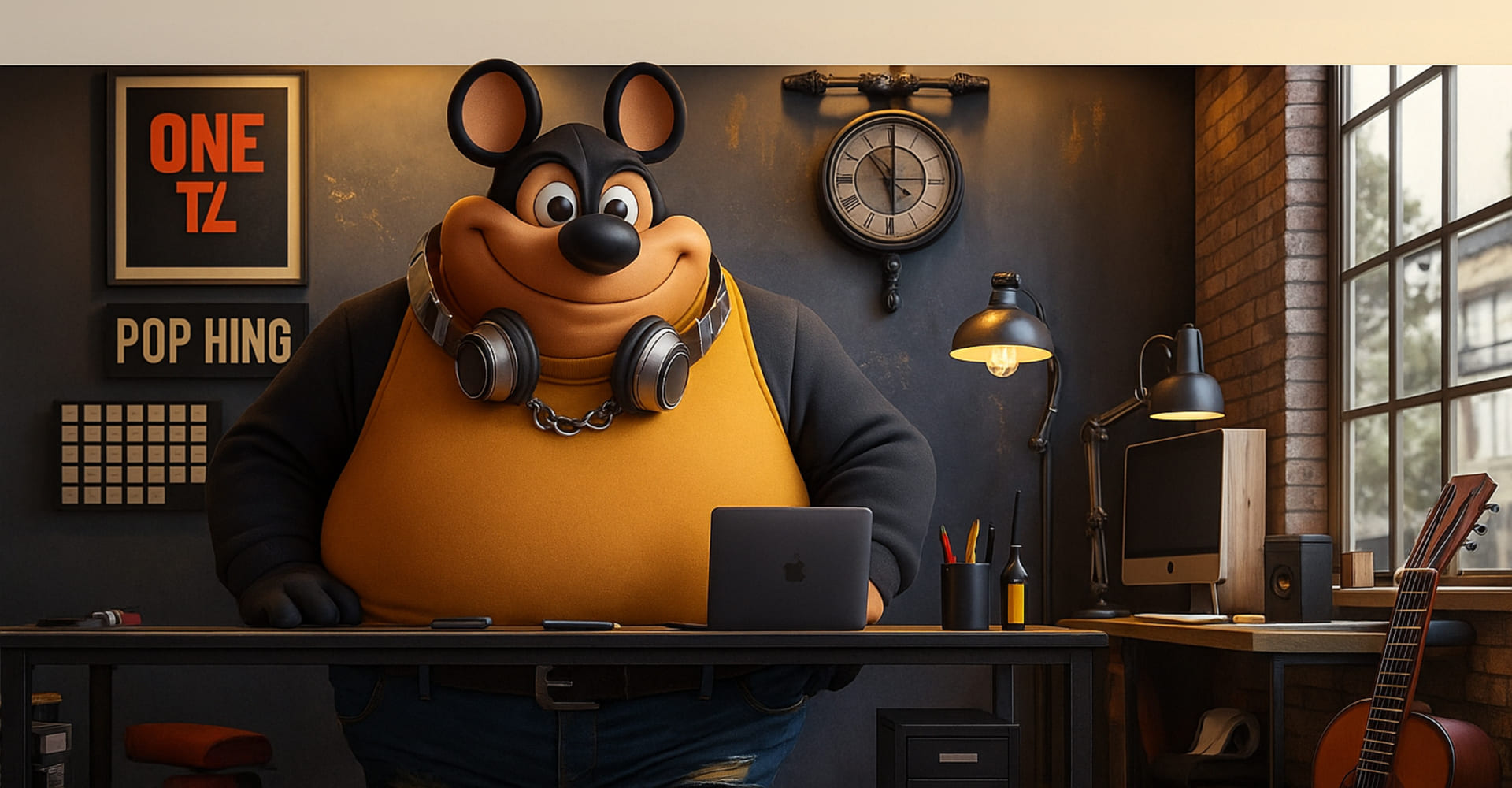
What is a mascot and how does a character increase brand sales?
What is a mascot in simple words and why does a brand need one? History from Michelin and Bibendum to Duolingo: 5 types of characters, step-by-step guide to creation and real company cases.

If a brand has its own style and its own voice, what does it lack to be happy? Quite possibly a mascot. These are, for example, the green owl Duolingo, the cat Matroskin “Prostokvashino” and the slightly creepy Mr. Beaver of Russian Utility Systems. To put it simply, this is the character that is needed to make the company alive. The trend is especially relevant in our time, when texts are written by ChatGPT, pictures are drawn by Midjourney, and interviews are conducted by AI avatars during calls and interviews.
Even state corporations have realized that their mascot works better than any press release. In his name, you can fool around, pretend to be dead, launch challenges on TikTok and still maintain your expertise. In this material, we understand what a mascot is, why a brand needs one, and which ones have become the most popular.
What is a mascot
The word “mascot” comes from the French mascotte, in simple words it is a good luck talisman, a rabbit’s foot chosen by a group (team, company) as its symbol. The American Heritage Dictionary of the English Language gives the following etymology: French mascotte is derived from Provençal mascoto (witchcraft, fetish), which in turn is from masco (witch), cognate with Latin masca (ghost, witch).
The French word mascotte came into use at the end of the 19th century, when Edmond Audran's opera La Mascotte was presented: about a girl who brought good luck as long as she remained innocent. Gradually, the “mascot = luck” connection took hold. As early as 1883, Sporting Life magazine mentioned the boy Chick as the mascot of the Boston Beaneaters baseball team. This was a real child who carried bats and helped baseball players; there is a version that it was he who laid the foundations for the mascot culture. And the first animal mascot may be Handsome Dan, a bulldog from Yale University. According to legend, he was purchased by Andrew B. Graves, a member of the rowing team and football team in 1892, and it was he who made the dog Yale's mascot. His tradition is still alive - in 2019, Dan’s title was already held by the eighteenth bulldog.
In the 20th century, mascots became part of popular culture. Sports clubs, armies and brands have used them as a symbol of team spirit, character and trust. In the USA, legendary characters are gradually appearing - the Bibendum man (Mr. Michelin) from Michelin, Tony the Tiger from Kellogg’s, Mr. Wedge from Procter Gamble and the soft Pillsbury Doughboy.
In the USSR, the most famous and beloved mascot was the 1980 Olympic Bear. Thirty years later, Russia again chose mascots for the 2014 Sochi Olympics: Polar Bear, Bunny and Snow Leopard (Leopard). Each of them reflected the traits of the Russian character - strength, perseverance and hospitality. At the same time, Zoich (an allusion to 2014) also became popular - the unofficial Internet mascot of the XXII Winter Olympic Games in the form of a reptile with Olympic rings in his eyes and a ski pole in his mouth, developed by Artemy Lebedev’s studio by order of the Sochi 2014 Organizing Committee.
Later, Zabivaka appeared - the wolf mascot of the 2018 FIFA World Cup in Russia. It was invented by student Ekaterina Bocharova, and the name was chosen by online voting. In addition to sports, mascots appear in cosmetics (the herbalist Grandmother Agafya, they even wrote letters to her, considering her to be a real character), in logistics (the seal Marina and the whale Russ State Customs Committee "Rusmarine") and other areas.
After 2018, there was a pause: the pandemic and economic instability of 2020–2023 shifted the focus of brands to digital products and functional communications. Instead of creating heroes, companies invested in performance art and influencer marketing. Mascots have temporarily gone into the shadows - their place has been taken by avatars and virtual characters on social networks.
Starting in 2024, brands are returning to mascots in droves. According to Digiday, large companies: Domino's, Cava, Hi-Chew have launched their characters. And you can already evaluate the results, for example, Domino’s received +10 thousand subscribers on social networks in just one day after the launch of Mac Scott, this is mac and cheese with a height of 2.1 meters. Mac became part of Domino's strategy to revitalize its presence on TikTok: the company was looking for a more authentic way to interact with users and made the mascot the hero of short videos.
What is a mascot for?
The reason is simple: audience attention is shrinking, the market is oversaturated, and reputational risks around live influencers are growing. Politics and culture wars have made any personal statement a potential crisis for a brand. The mascot allows you to participate in the hype and comment on high-profile situations without fear of causing “cancellation.”
Top 5 reasons to use a mascot:
-
Maintaining attention and increasing recognition. In a world of content where fingers scroll through your feed faster than you can say “Hello!”, a strong visual character helps a brand linger on the screen. Mascots help form images and associations: when they see them, people remember the brand faster.
-
Emotional connection/personification. The mascot corresponds to the brand’s values, but has its own character: more playful, childish or emotional. It helps the company get closer to the audience and reach new segments: for example, the mascot of the Ministry of Emergency Situations, the superhero Tula Gingerbread, was invented specifically for children.
-
Protection against reputational risks. Living influencers and public figures easily become the object of scandals. The mascot allows space for experimental, even provocative comments while remaining neutral. This is an alter ego of the brand that voices what the brand cannot say directly. What Aviasales is allowed cannot be used if you are a Belarusian clothing manufacturer - but you can hide behind a mascot. Absurd humor, memes, and unexpected images help capture Gen Z's attention.
-
Audience involvement. The mascot turns marketing into a game. He can lead challenges, launch viral videos, participate in flash mobs, comment on trends and appear in user-generated content. This format naturally engages the audience: a person reacts to a character with whom they want to interact: take pictures and shoot videos, make photos, and so on. The mascot becomes the hero of merch, competitions and promotions, helps promote products and gives discount codes. The same Duolingo owl appears on Crocs and T-shirts, is sold as a plush toy, goes to concerts (the 2024 Charli XCX concert) and makes music videos.
-
Connection of generations. A good mascot lives with his audience: he grows up, changes his style, but remains the same hero who is remembered from childhood. This gives the brand a human warmth and a sense of “family memory” where advertising becomes a tradition and the brand becomes part of family stories. For example, Mister Michelin stopped drinking and smoking for 120+ years, lost weight, changed his concept, but your grandfather still easily recognizes him.
Types of mascots
Historically, talismans are divided into several categories. First of all, these are human characters: ordinary people, superheroes, fictional figures who correspond to the character of the brand or national archetype. Animal mascots in the form of real or anthropomorphic images are also popular. And in third place are character objects: singing hot dogs, robots and a Word paper clip.
If previously mascots existed mainly in the form of life-size puppets or cartoon characters, now more is required from them. In 2025, new formats appear: characters with AI elements begin to be tested (for example, robot assistants Samsung Ballie and LG Q9). Digital avatars that live on social networks, use AR filters and participate in TikTok challenges are gaining popularity. Brands can combine several types: a living character (life-size doll) appears at offline events, and his virtual double manages social networks, creates content and communicates with the audience online.
How to create a mascot
The main mistake is to start with design. The mascot is part of the brand identity and works according to the same KPIs as any marketing campaign: awareness, engagement, return on investment. Therefore, before creating it you need to define:
-
Purpose of creation. Do you want a witty influencer, an interactive companion, or a fun consultant for kids? Will he work with your audience or is his task to recruit new ones?
-
What emotion does it convey? A mascot can entertain, inspire, support, answer questions, sell, while remaining part of the communication ecosystem.
-
What is his story? Each strong mascot has its own biography: where he came from, what he talks about, what he loves, what his habits are. This is the only way he comes to life.
-
What does he look like? At this stage it’s time to call a designer. The mascot should be recognizable on a business card, in TikTok and in a VR helmet. Good characters adapt to any format, from stickers to life-size dolls.
-
What environment is it in? Where does the hero live: in stories, on the website, in a chatbot, in messengers or in offline meetings? Modern mascots are omnichannel, appearing wherever users spend time.
Important: the mascot is intellectual property. To prevent competitors from copying your idea, register it immediately as a trademark: you can submit an application on the Online Patent website. After this, you will be able to earn income from branded merch and collaborations and protect your rights in court if your brand is used illegally.
A good mascot is a full-fledged member of the marketing team. He blogs, makes fun of competitors, participates in viral campaigns and brings profit to the company.
Examples of company mascots
Let’s not talk about Ronald McDonald and the purple cow Milka for the thousandth time. It’s better to see what mascots Russian companies registered in 2025.
-
Groom from Lyubyatovo. In August 2025, the company registered its own chocolate monster - trademark No. 1140394. The groom, previously seen on ChocoZavr packaging, now lives an independent life. This is a rare case when an FMCG brand officially separates a character from a product to use it in communications, games and merch.
-
Little Fox from Fix Price. Also in August, the Fix Price network introduced a new mascot - Fox the fox, created in a neural network. This is the second hero of the brand after Fippy the Hedgehog. Fox has appeared in commercials, animation and social networks, made using neural networks. The company has not yet filed a trademark registration, but is positioning the character as part of its identity and future promotions.
-
Tim the Raccoon from Tape. Rospatent approved the network's application in September 2025. Tim is thrifty, good-natured and a bit of a superhero: he has the company logo on his chest. It is already appearing in commercials, branded chats and store design. The choice of the animal is not accidental: Lenta supports raccoons in zoos.