What is UX and UI design and what is the difference
We tell you in simple words what UX and UI design are and how they differ. Let's figure out what kind of profession this is and what knowledge and skills are needed. Let's share how to become a UX/UI designer.

If you open a website or application, you immediately find what you need, order, and you never have the thought “Damn!” no matter what the occasion, UX and UI designers are handsome. They made sure that the buttons were at hand, set up precise filters and added memory to the cart: even if you entered without authorization, it will save the selected products.
Nobody says: “Wow, what a good UX!”, they just use it. But half of the reviews will be bad. This is, for example, when pages freeze while browsing, or the order form is reset when entering a promotional code, and you have to make a purchase again. If the UI is crooked, then the “Buy” button will be buried in banners, and animations will ripple in your eyes. There are no options but to close the tab and never come back.
UX/UI designers have always been worth their weight in gold. Now that vibecoding has appeared and the Internet is overflowing with sites and applications created by noobs in the neural network, and in Linkedin the profession of “cleaning up vibecoders” is gaining momentum, you even have to fight for real specialists. The best of the best are already in the Veonix team, in the article they explained how UI differs from UX, what knowledge and skills are needed for this profession in 2025, and what its pros and cons are.
What is UX and UI design
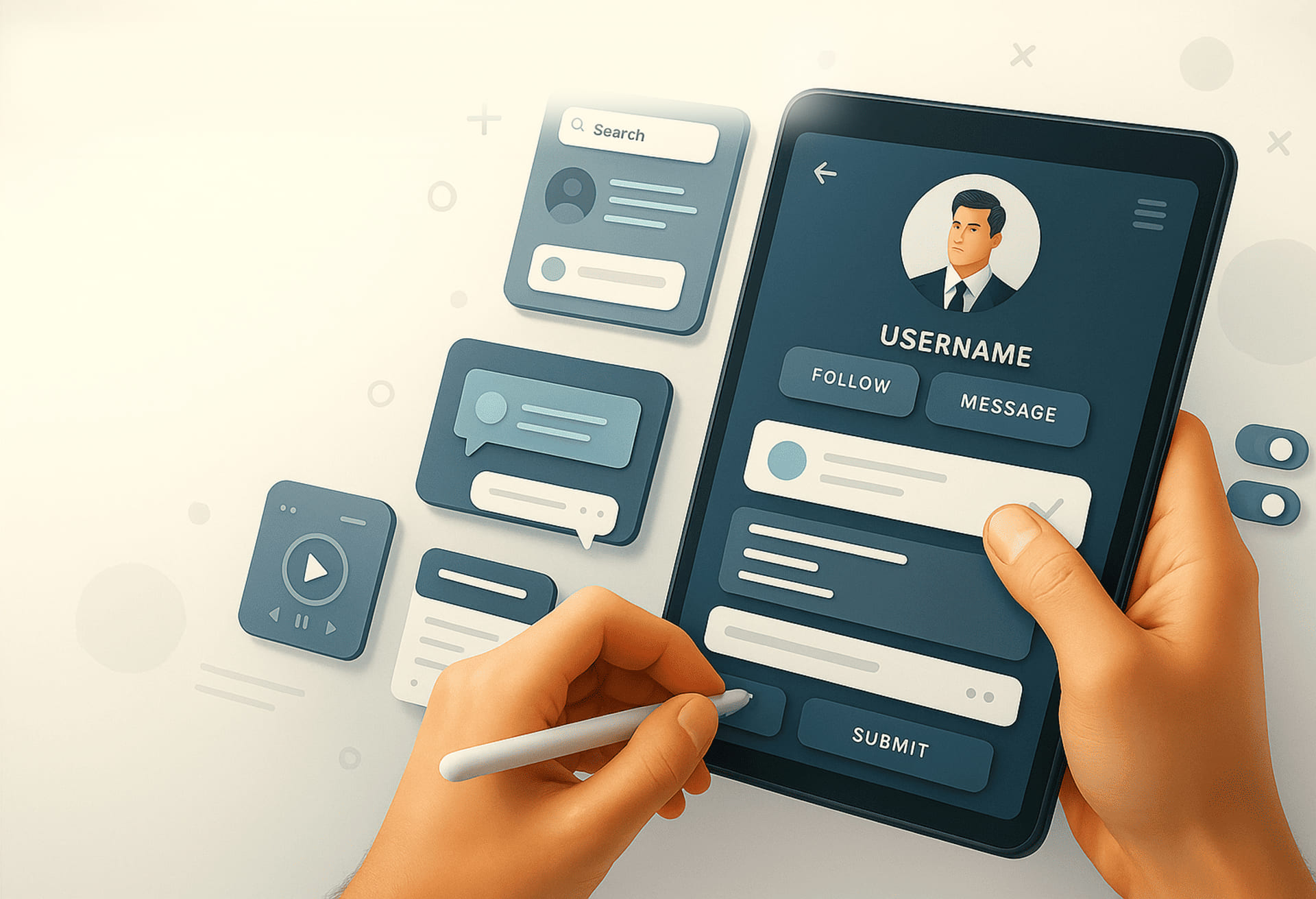
UX (User Experience) design - literally translated as “designing user experience.” Its task is to make human interaction with the product as clear and convenient as possible. A UX designer thinks about logic, scenarios, and the user journey.
UI (User Interface) design - literally “user interface design”. This is the visual shell of the product: colors, typography, buttons, icons, animations. A UI designer is responsible for aesthetics and emotional perception so that a website or application looks neat and modern on any screen.
Imagine a banana. UI is the yellow glossy peel, the even shape, which is why you reach for this fruit and not the one next to it. UX is responsible for how easy it is to peel a banana, whether it breaks, and how dirty your fingers are.
What is the difference between UX and UI
On the technical side, UX design starts with data analysis. It is important to understand user behavior, their goals and triggers. Based on this, maps of user scenarios (User Flow), screen structure (Wireframes), and path maps (Customer Journey Map) are built. A UX designer tests hypotheses, designs navigation, reduces unnecessary clicks, and achieves stable logic.
UI comes after UX. At this stage, design layouts, a UI kit, a system of components, animations and the interface itself are created. The designer works with grids, contrast, typography, micro-interactions, and adapts the project to different devices.
What does a UX/UI designer do?
A UX/UI designer is a person and a ship who designs the logic and visuals of a product at the same time. In fact, it's convenient when you know how everything works from the inside, it's easier for you to make it look beautiful on the outside. Each specialist works according to his own scheme; approximate steps are given below.
-
Research. The designer studies the audience, looks at heat maps, metrics, behavior scenarios, collects data through interviews and analytics, runs A/B tests to check which “Buy” button, orange or white, will collect more clicks. The task is to understand what the user wants.
-
UX architecture. Based on the information from the point above, the specialist thinks through navigation, makes wireframes (black and white screen diagrams), tests prototypes on real people and adjusts the structure to ideal logic.
-
UI stage. Based on the proven structure, the designer creates a visual system: color palette, typography, icons, button states, microanimations. Assembles a design system (UI Kit) so that the interface looks uniform and adapts to any device.
In parallel, there is interaction with development. A UX/UI designer prepares specifications, exports components, makes sure that the layout doesn’t go wrong, and checks the result in production.
Knowledge and skills of a UX/UI designer
A UX/UI designer must understand equally well how people think and how code thinks.
Hard skills
-
Figma - it has already become a household name, like copier, we also use alternatives in our work. If you don't know how to autolayouts and components, you've already lost in the race with AI.
-
Interactive online whiteboards - to draw user flows and argue with marketers.
-
Yandex Metrica, Yandex Vzglyad and other analytics services to create heat maps, see where the user clicks more often and at what stage they fall off.
-
Prototyping - from simple wireframes to clickable models, where you can poke buttons and evaluate the speed of transitions.
-
The UI system and design kit are the foundation on which all pages and screens are built.
-
Layout basics (HTML/CSS) - to have arguments to argue with the developer when he says “you can’t do that.”
-
Neurotools: Midjourney, Uizard, Galileo AI - for quickly searching for ideas and references, translating thoughts into pictures.
Soft skills
-
Empathy. Without it, the designer simply cannot imagine how difficult it is for a grandmother with a push-button telephone to order knitting needles in an unadapted interface.
-
Communication. Especially with clients. Especially with those who think that six different fonts on one screen is cool and unusual.
-
Systems thinking. A UX/UI designer should see the entire sales funnel, from the banner under the Yandex search window to the final “Buy” in the cart.
-
Strong nerves. If the phrase “everything broke after the update” terrifies you, better think about becoming a barista.
In 2025, UI/UX design trends include, for example, immersive formats. If you know how to think in 3D, build interfaces for VR or adjust UX to the AR space, you immediately have a different price list and a different league of customers: banks, developers, medicine, large IT products. Voice interfaces and working with NLP are also a topic; this is not yet a mass feature, but if you can set up a dialogue between a person and a site, this is a good argument in salary negotiations. Another hidden boost is the ability to make micro-interactions and animations: the menu button enlarges slightly when the cursor is hovered over it, when clicked, a soft highlight or a short confirmation animation appears, such effects make interaction with the interface more comfortable.
Pros and cons of the profession
Pluses
-
You see the results of your work. You also get feedback from satisfied (or not so satisfied) users live.
-
Keep your brain sharp. UX/UI is an eternal training of attention and logic, an excellent prevention of early dementia and Alzheimer’s.
-
You will always be in demand. From our experience, there are always more projects than good designers. And no, AI will not be able to replace the “leathers”.
-
You can work from anywhere. A laptop, internet access and software are all you need. Just complete tasks on time.
-
You feel a little like a god. When, finally, everything works as intended and not a single pixel interferes.
Cons
-
Everyone understands design. At least that’s what managers, customers, their cats and neighbors think. There will be a lot of edits, and often according to the “as I see it” principle. Humble yourself.
-
You will have to be a designer, an analyst, and a psychologist. UX/UI is a profession at the intersection of disciplines; you don’t want to read about cognitive distortions, but your competitors have already read and are using it.
-
Endless tool updates. A new neural network appeared, access to the old software was closed, and the algorithms were changed. Stay informed and implement it to keep up with trends.
-
Emotional swing. Today, on a call, the customer was delighted with the perfect prototype. Tomorrow - I sent a list of edits on 5 pages of Word with the note “Just a little tweak here.”
-
Perfectionism is an occupational disease. A UX/UI designer sees crooked buttons in ATMs, elevators and on the intercom panel. There is no cure for this.
How to become a UX/UI designer
You can go the long way - through the university. Programs in the design of digital products, interfaces and similar ones are available at the National Research University Higher School of Economics, Moscow State Technical University named after. Bauman, ITMO University, etc. Usually this is 4 years of theory, art history and a little practice. You will have a diploma, but your portfolio and experience will be developed from scratch.
If you want to get into the profession right away, consider courses on EdTech platforms like Yandex Practicum, Skillbox. There is an emphasis on up-to-date tools, projects go into a portfolio, workshops are led by experienced designers, and orders can be taken while still in the learning process.
And if you just want an interface that both your son and your grandmother will love, come to Veonix. We understand the theory of generations, follow trends, test hypotheses and we create professional websitesthat solve business problems.